Seattle is known for its waterfront scenery, evergreen forests, and outdoor lifestyle, but some of the city’s most enjoyable recreational spaces sit outside the usual tourist itinerary. One of them is Warren G. Magnuson Park, a large public park on the northeastern shore of Lake Washington. With a swimming beach, walking and biking paths, open lawns, wetlands, sports facilities, and beautiful lake views, it offers plenty of ways to spend a day outside without leaving Seattle.
Whether you’re planning a relaxing afternoon by the water, looking for a place to walk with your dog, organizing a family outing, or hoping to discover a quieter side of the city, Magnuson Park has something worth exploring. Its combination of natural habitats and recreational amenities makes it a destination for residents and visitors who want more than a quick stop for photographs.
This guide explores the best things to do at Magnuson Park in Seattle, Washington, including where to find the beach, which trails to explore, what wildlife you might encounter, and how to plan a worthwhile visit.
Where Is Magnuson Park in Seattle?
Magnuson Park is located in Seattle’s Sand Point neighborhood along Lake Washington, northeast of downtown. The park occupies a former naval air station, and traces of its military history remain visible in the surrounding buildings, open spaces, and layout.
Today, the grounds have been transformed into a public recreational destination with facilities for sports, outdoor education, community activities, and nature conservation. Its size gives visitors room to spread out, making it feel different from smaller neighborhood parks closer to the city center.
The park is especially appealing to people who enjoy combining several activities in one outing. You can walk along a lakeside path, spend time on the beach, explore a wetland habitat, and enjoy a picnic without having to travel between separate destinations.
Magnuson Park is also a useful alternative to some of Seattle’s busier waterfront locations. While popular areas can become crowded during sunny weekends, the park’s extensive grounds offer multiple places to explore.
Best Things to Do at Magnuson Park Seattle
1. Relax at Magnuson Park Beach
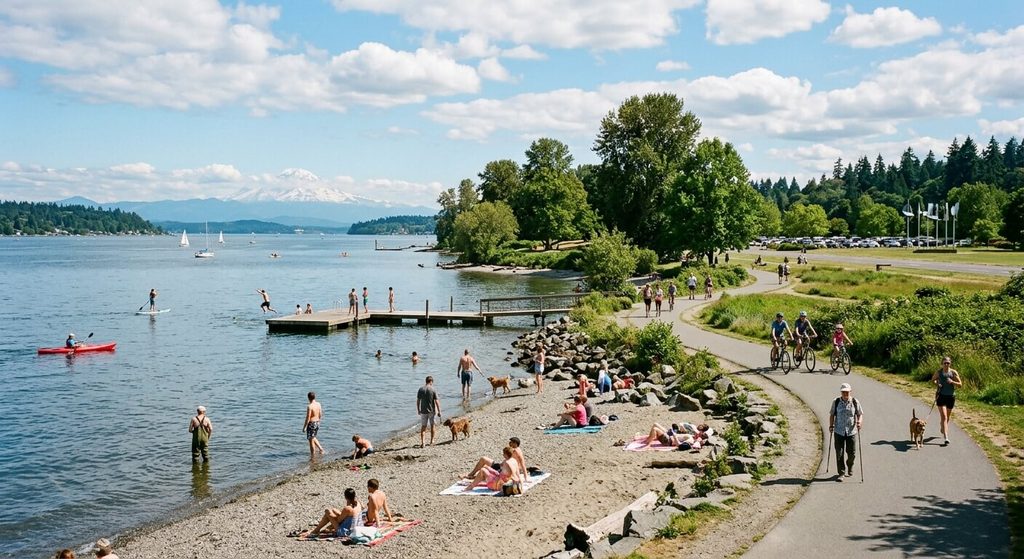
One of the main attractions is Magnuson Park Beach, a designated swimming area along Lake Washington. During warmer months, the beach is a popular place to cool off, enjoy the waterfront, or relax in the sunshine.
Unlike a traditional ocean beach, the setting features freshwater, views across Lake Washington, and a more sheltered atmosphere. It’s an inviting place to bring a towel, enjoy a book, or watch the activity on the lake.
Visitors can make the most of the beach by:
- Swimming when seasonal conditions and posted safety guidance permit.
- Relaxing on the sand or nearby grassy areas.
- Watching kayakers, paddleboarders, and other lake users.
- Enjoying a picnic before or after spending time near the water.
- Photographing the shoreline and the changing light across the lake.
Summer is generally the most appealing season for a beach visit, particularly on warm afternoons. However, swimming conditions, lifeguard availability, and beach amenities can vary by season. Check current Seattle Parks guidance and posted signs before entering the water.
Even when it’s too cold for swimming, the shoreline can still be a pleasant place for a walk and a little fresh air.
2. Explore the Walking and Biking Paths
Magnuson Park is a great choice for people who want to get outside without committing to a challenging hike. Its network of paths connects open fields, recreation areas, natural habitats, and lakeside scenery.
The experience is different from hiking in the Cascade foothills. Instead of steep climbs and rugged terrain, expect a more relaxed outing with opportunities to stop, take photographs, watch birds, or enjoy the surroundings at your own pace.
Walking is an easy way to explore the park, especially if you’re visiting with children or people who prefer a gentle outdoor activity. Cyclists can also use appropriate park paths and designated routes, following posted signs and yielding to pedestrians where required.
For a more enjoyable walk, consider building a route around a few points of interest rather than trying to cover the entire property in one go. Start near the beach, continue toward the open lawns, and then explore a natural area if time permits.
Comfortable shoes are useful because your chosen route may include paved paths, grass, and other surfaces. Bring water on warm days, and remember that some stretches offer limited shade.
3. Discover the Wetlands and Wildlife Habitats
Beyond its recreational facilities, Magnuson Park contains important natural areas that provide habitat for birds and other wildlife. Wetlands and restored landscapes offer a quieter contrast to the sports fields and busy beach.
Nature lovers can spend time observing birds, listening for calls among the vegetation, and noticing how the landscape changes between open water, marshy areas, and grassy habitats.
Depending on the season, you may spot waterfowl, songbirds, and other wildlife. Sightings are never guaranteed, but moving slowly and keeping a respectful distance can improve your chances of observing animals without disturbing them.
Wildlife watching is particularly rewarding for visitors who enjoy photography or want a more peaceful activity than organized sports. Early mornings can offer a calmer atmosphere, although the best viewing opportunities depend on weather, habitat conditions, and seasonal migration.
To help protect the park’s natural areas, stay on designated paths where available, avoid feeding wildlife, and keep dogs under control in accordance with park rules. Use binoculars or a camera zoom instead of approaching animals.
4. Visit the Magnuson Park Off-Leash Dog Area
Traveling with a dog? Magnuson Park is well known for its substantial off-leash dog area, which provides space for dogs to run and play in designated surroundings.
The off-leash area is a major attraction for local dog owners who want more room than a typical neighborhood dog park offers. It can also be a convenient stop during a longer walk around the park.
Before visiting, check current rules, including any restrictions involving specific sections, wildlife habitats, and beach access. Not every part of Magnuson Park is an off-leash area, so dogs should remain leashed wherever required.
Bring waste bags, carry drinking water for your pet, and supervise interactions with other dogs. On hot days, check the ground temperature and make sure your dog has opportunities to rest.
If you’re visiting without a pet, the designated dog area is still worth knowing about when planning your route, particularly if you prefer quieter sections of the park.
5. Enjoy a Picnic With Lake Washington Views
Sometimes the best outdoor activity is doing very little. Magnuson Park’s open lawns and picnic areas make it an appealing destination for an unhurried lunch or afternoon break.
Pack sandwiches, fresh fruit, snacks, and plenty of water, then choose a suitable spot near the recreational areas or shoreline. A picnic can be a simple way to turn a short visit into a more relaxed outing.
Families can combine lunch with time on the beach or an easy walk. Couples might prefer a quieter patch of grass with a view of the lake, while groups can use appropriate picnic facilities for a casual get-together.
For a comfortable visit, bring a blanket, sunscreen, and an extra layer of clothing. Seattle weather can change quickly, and a sunny start doesn’t guarantee a warm afternoon.
Keep food secured, clean up thoroughly, and dispose of waste in the appropriate containers. Leaving the area as you found it helps keep the park welcoming for everyone.
6. Explore the Park’s Open Fields and Recreation Areas
Magnuson Park has more to offer than scenery. Its extensive grounds include sports fields, courts, and other recreational facilities that make it a destination for active visitors.
Depending on facility availability, visitors may be able to enjoy activities such as running, casual ball games, tennis, or other outdoor sports. Some facilities may require reservations, organized bookings, or additional fees.
The open spaces are also useful for low-key activities that don’t require specialized equipment. You might stretch after a walk, play catch with the family, or find a grassy area to relax while others enjoy the sports facilities.
If a particular activity is the main reason for your visit, check the relevant facility’s current availability before traveling. Organized games, maintenance, and scheduled events can affect access to some areas.
7. Photograph the Lake and Enjoy the Waterfront Scenery
Magnuson Park offers plenty of opportunities for outdoor photography, particularly along Lake Washington and around its natural areas.
The shoreline provides a different perspective on Seattle than the downtown skyline viewpoints. Instead of photographing tall buildings, you can focus on the lake, passing boats, shoreline vegetation, and the changing colors of the sky.
Photographers may want to visit in the morning for softer light or later in the day for warmer tones. Cloudy weather can also create atmospheric images, especially when reflections and subtle shifts in light become the main subjects.
Useful photo opportunities include:
- Reflections on Lake Washington.
- Shoreline details and beach scenery.
- Birds and other wildlife observed from a respectful distance.
- Seasonal vegetation around natural areas.
- Wide views of the park’s open spaces.
If you’re hoping to photograph a particular bird or capture a specific lighting condition, allow extra time. Wildlife and weather are unpredictable, and some of the most memorable images happen when you slow down and observe rather than rush from one location to another.
8. Visit the Magnuson Park Wetlands and Environmental Learning Areas
For visitors interested in conservation, the park’s natural areas provide an opportunity to learn about urban ecosystems and habitat restoration.
Wetlands help support wildlife and contribute to the health of the surrounding environment. They also demonstrate how public green spaces can serve both recreational and ecological purposes within a large city.
As you explore, look for changes in plant life, water levels, and bird activity. These small details can make a walk more engaging, particularly for families introducing children to nature.
Educational programming and community activities may be offered through local organizations or park partners at different times of the year. If you want a guided experience, check current event listings before your visit.
Respect barriers and signs around protected areas, and avoid entering sensitive habitats. Staying on established routes helps preserve the landscape while allowing future visitors to enjoy it.
9. Make Time for a Slow Outdoor Day
One advantage of Magnuson Park is that you don’t need a strict itinerary to enjoy it. The park is large enough to support a full afternoon outdoors, but visitors can also make it a short stop.
A flexible visit might begin with a lakeside walk, continue with time at the beach, and finish with a picnic or wildlife watching. Active visitors can add cycling or sports, while families might alternate between playtime and quieter breaks.
The best approach is to choose two or three priorities instead of attempting to see every section. This leaves time to appreciate the surroundings and makes the outing feel less like a checklist.
Magnuson Park is particularly suited to visitors who value variety. It offers a mix of water, open space, recreation, and nature without requiring a long drive out of Seattle.
Best Time to Visit Magnuson Park
The best time to visit depends on the activities you have in mind.
Summer: Best for Swimming and Beach Activities
Summer is a popular season for Magnuson Park, particularly when warm weather brings people to Lake Washington. It’s an excellent time for beach visits, picnics, cycling, and spending longer periods outdoors.
Arrive earlier in the day on warm weekends if you prefer a quieter experience. Before swimming, check current water-quality advisories and any posted beach restrictions.
Spring: Best for Fresh Greenery and Birdwatching
Spring brings new growth and seasonal wildlife activity. Walking through the park can be especially enjoyable as vegetation develops and birds become more active.
Conditions can be wet, so waterproof footwear and a light rain jacket may be useful. The beach can still be enjoyable for walking even when temperatures are too cool for swimming.
Fall: Best for Peaceful Walks and Photography
Autumn often brings cooler temperatures and a quieter atmosphere than peak summer. The park remains a good option for walking, birdwatching, and photography.
Changing light and seasonal vegetation can make familiar routes feel different. Bring layers, since temperatures can shift throughout the day.
Winter: Best for Quiet Outdoor Exploration
Winter is suitable for visitors who don’t mind cool, damp weather. A shorter walk, a wildlife-watching session, or a visit to the open spaces can provide a refreshing break from indoor activities.
Swimming and extended beach visits are less appealing during cold weather, but the park’s paths and natural areas can still be worth exploring. Check weather conditions and park notices before setting out.
How to Plan Your Visit to Magnuson Park
A little preparation can make your trip more enjoyable, especially if you plan to combine several activities.
Getting There
Magnuson Park is in Seattle’s Sand Point neighborhood, on the northeastern side of Lake Washington. You can reach it by car, bicycle, or public transportation, depending on your starting point.
If you’re driving, use a navigation app to find the appropriate park entrance and parking area for your chosen destination. The park is extensive, so choosing a parking area near the beach, dog area, or recreation facility can save walking time.
Visitors using public transit should check current King County Metro routes and schedules. Service patterns and stop locations can change, so confirm your journey before leaving.
What to Bring
Your packing list will depend on your planned activities, but these essentials are useful for many visits:
- Comfortable walking shoes.
- Drinking water and snacks.
- Sunscreen and a hat during sunny weather.
- A waterproof jacket or extra layer.
- A picnic blanket if you plan to relax on the grass.
- A camera or binoculars for wildlife watching.
- Dog supplies if visiting with a pet.
- Swimming gear and a towel when conditions permit.
For longer outings, consider bringing a small day bag so you can carry essentials without making your walk uncomfortable.
Parking and Accessibility
Parking is available in designated areas, but the most convenient location depends on where you plan to spend your time. Busy summer days and special events may affect availability.
Some park paths and facilities offer accessible routes, although surfaces, grades, and access conditions vary throughout the property. If you need a specific accessible entrance, restroom, or route, check current Seattle Parks information before your visit.
Restroom availability and operating hours can also vary by facility and season. Confirm the amenities you need rather than assuming every area has the same services.
Park Rules and Safety
Follow posted signs, use designated paths, and respect any restrictions around swimming, dogs, sports facilities, and protected habitats.
Before entering Lake Washington, check for current water-quality advisories and observe any swimming warnings. Conditions can change, and a beach that looks calm may still have hazards.
Cyclists should watch for pedestrians, and everyone should be mindful of shared spaces. If you’re visiting with children, establish a meeting point and keep them within sight near the water.
Check the official Seattle Parks and Recreation website for current information about park amenities, closures, beach conditions, and scheduled activities.
A Sample Half-Day Itinerary for Magnuson Park
If you have three to four hours to explore, this flexible itinerary combines the park’s main attractions without making the visit feel rushed.
First hour: Start with a walk. Begin near an appropriate parking area and follow a route that takes you through open spaces or along the waterfront. Take your time and enjoy the scenery.
Second hour: Explore the beach. Spend time beside Lake Washington, take photographs, or swim if the beach is open and conditions are suitable.
Third hour: Enjoy lunch or a picnic. Find an appropriate grassy area or picnic spot and take a break before continuing.
Final hour: Choose your own adventure. Look for birds in the natural areas, visit a designated recreation facility, or extend your walk along another section of the park.
This itinerary is only a starting point. Families with young children may prefer more time at the beach, while photographers and birdwatchers may want to spend longer in natural areas.
Other Places to Explore Near Magnuson Park
If you have additional time, consider pairing your visit with other Seattle destinations. The best choices depend on your interests and how much time you have available.
University of Washington: A good option for visitors interested in campus architecture, landscaped grounds, and seasonal scenery. Check campus access and event information before visiting.
Green Lake Park: A popular destination for walking, jogging, cycling, and enjoying a freshwater lake in a different part of Seattle.
Washington Park Arboretum: Worth considering if you enjoy gardens, trees, and peaceful walking routes through landscaped natural surroundings.
The Burke-Gilman Trail: A well-known regional trail that provides opportunities for cycling and walking through several Seattle neighborhoods.
These destinations are best treated as separate stops rather than assuming they are all within a short walk of Magnuson Park. Check distances and transportation options when planning your day.
Is Magnuson Park Worth Visiting?
Magnuson Park is worth considering if you want to experience Seattle beyond its most recognizable tourist attractions. It combines a freshwater beach, open recreational spaces, walking and cycling opportunities, wildlife habitats, and room to relax.
It’s especially appealing to families, casual walkers, dog owners, cyclists, photographers, and anyone who enjoys spending time near the water. Visitors who prefer a relaxed outdoor outing can enjoy the park without booking a tour or preparing for a strenuous hike.
The park’s size is part of its appeal, but it also means planning a route can help. Choose the areas that interest you most, check current facilities and conditions, and allow enough time to enjoy the scenery rather than rushing through it.
Whether you’re swimming in summer, watching birds in spring, photographing the shoreline in autumn, or taking a quiet winter walk, Magnuson Park offers a different way to experience Seattle’s outdoor character.
Frequently Asked Questions About Magnuson Park Seattle
Is Magnuson Park free to visit?
General access to the park is typically free. However, some facilities, organized activities, reservations, or special programs may involve fees. Check current information before your visit.
Can you swim at Magnuson Park Beach?
Yes, Magnuson Park has a designated swimming beach on Lake Washington. Swimming is subject to seasonal operation, posted restrictions, water quality, and current safety conditions.
Are dogs allowed at Magnuson Park?
Dogs are allowed in designated areas, including the park’s off-leash dog area. Leash requirements apply elsewhere, and visitors should follow posted rules regarding beaches and natural habitats.
How long should you spend at Magnuson Park?
Allow around two to four hours for a relaxed visit involving walking, beach time, or a picnic. Visitors interested in sports, photography, birdwatching, or several different areas may want to spend half a day or longer.
Is Magnuson Park good for families?
Yes. The park offers open spaces, a beach, walking paths, and recreational facilities that can suit different ages and interests. Families should supervise children closely near the water and check which amenities are available during their visit.
Can you ride a bike at Magnuson Park?
Cycling is an option on appropriate park routes and paths. Follow posted rules, watch for pedestrians, and check route conditions before setting out.
Is Magnuson Park good for birdwatching?
Yes. Its wetland and shoreline habitats provide opportunities to observe birds and other wildlife. The species you see will depend on the season, weather, and local conditions.
What should you not miss at Magnuson Park?
For a first visit, prioritize Magnuson Park Beach, a walk through the park’s open spaces, and time exploring its natural habitats. Add a picnic or another recreational activity if you have extra time.
Final Thoughts
Magnuson Park shows a side of Seattle that is easy to overlook when planning a trip around downtown attractions. Its beach, trails, wetlands, sports facilities, and open lawns create a destination where visitors can be active, enjoy nature, or simply slow down for a few hours.
You don’t need an elaborate plan to appreciate the park. Choose a comfortable walking route, spend some time near Lake Washington, and leave room for an unexpected wildlife sighting or a peaceful break by the water.
For anyone searching for outdoor activities in Seattle, Magnuson Park deserves a place on the list. It offers the flexibility to turn a quick afternoon visit into a memorable day outside.
The written content on this page was generated by ChatGPT.